Project Reporting
AI-first ad campaign measurement—turning reactive reporting into an intelligence surface agencies can use in minutes, not days.
Overview
Foursquare’s Attribution product helps agencies measure ad performance, but legacy reporting leaned on custom cuts, analyst handoffs, and static dashboards—high friction for teams that need fast, defensible answers across channels.
This project redefined Project Reporting as an AI-first intelligence surface: guided insight, clearer information architecture, and explicit trust patterns so users move from “what happened?” to next steps in minutes—not days of back-and-forth.
Responsibility
Principal Product DesignerI led product design for Attribution reporting—pairing research, IA, and prototyping with Engineering and stakeholders to redefine how agencies move from campaign questions to validated measurement insights.
Problem
Foursquare’s legacy attribution product served agencies measuring ad performance, but adoption and retention lagged. Customers leaned on our team for custom reports; sales and analysts stitched together campaign stories by hand—slow, expensive, and repetitive.
Static dashboards and one-off exports rewarded report-building, not decisions. Cognitive load stayed high, while the path from “what happened?” to “what should we do?” stayed fragmented.
Approach
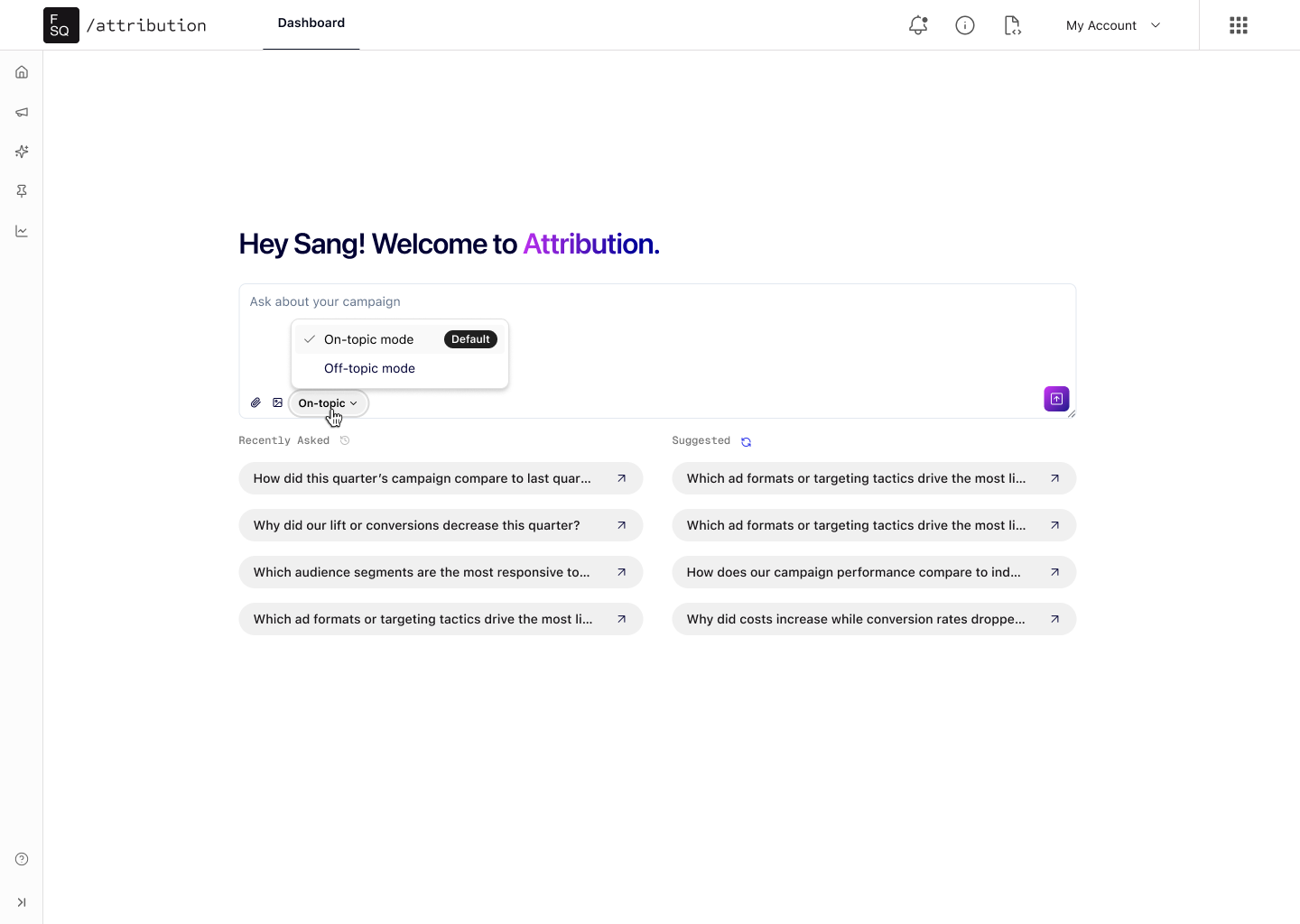
- Reframe the product narrative—from reactive reporting to an AI-first intelligence layer that surfaces explanations and next questions, not only charts.
- Map real agency workflows (interviews, current-workflow audits, and journey touchpoints) so navigation and state models match how teams review omnichannel campaigns.
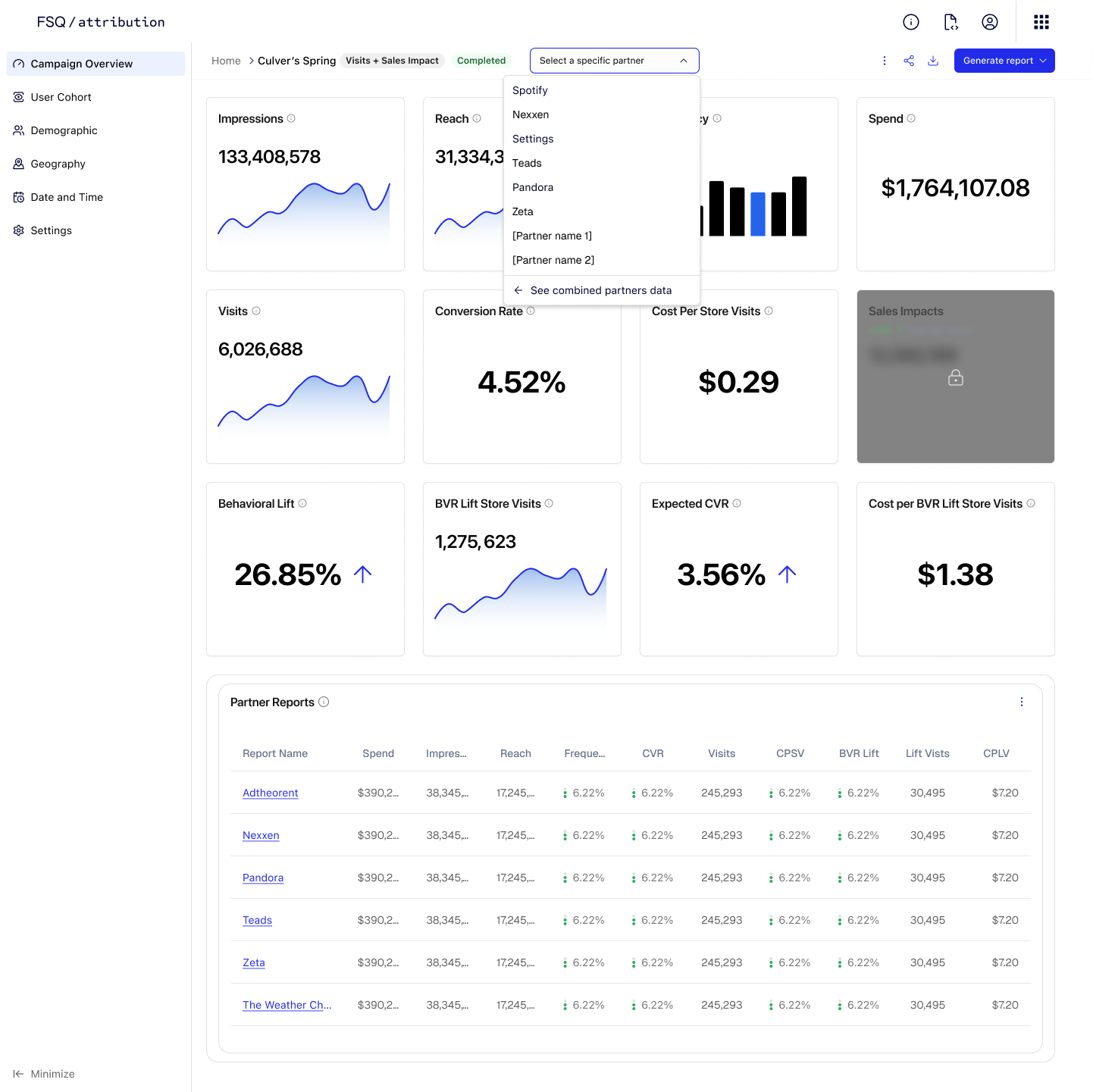
- Prototype and test progressively: default overview, AI-centered deep dives, loading and report-generation states—closing the trust gap before scaling to engineering delivery.
Key design decisions
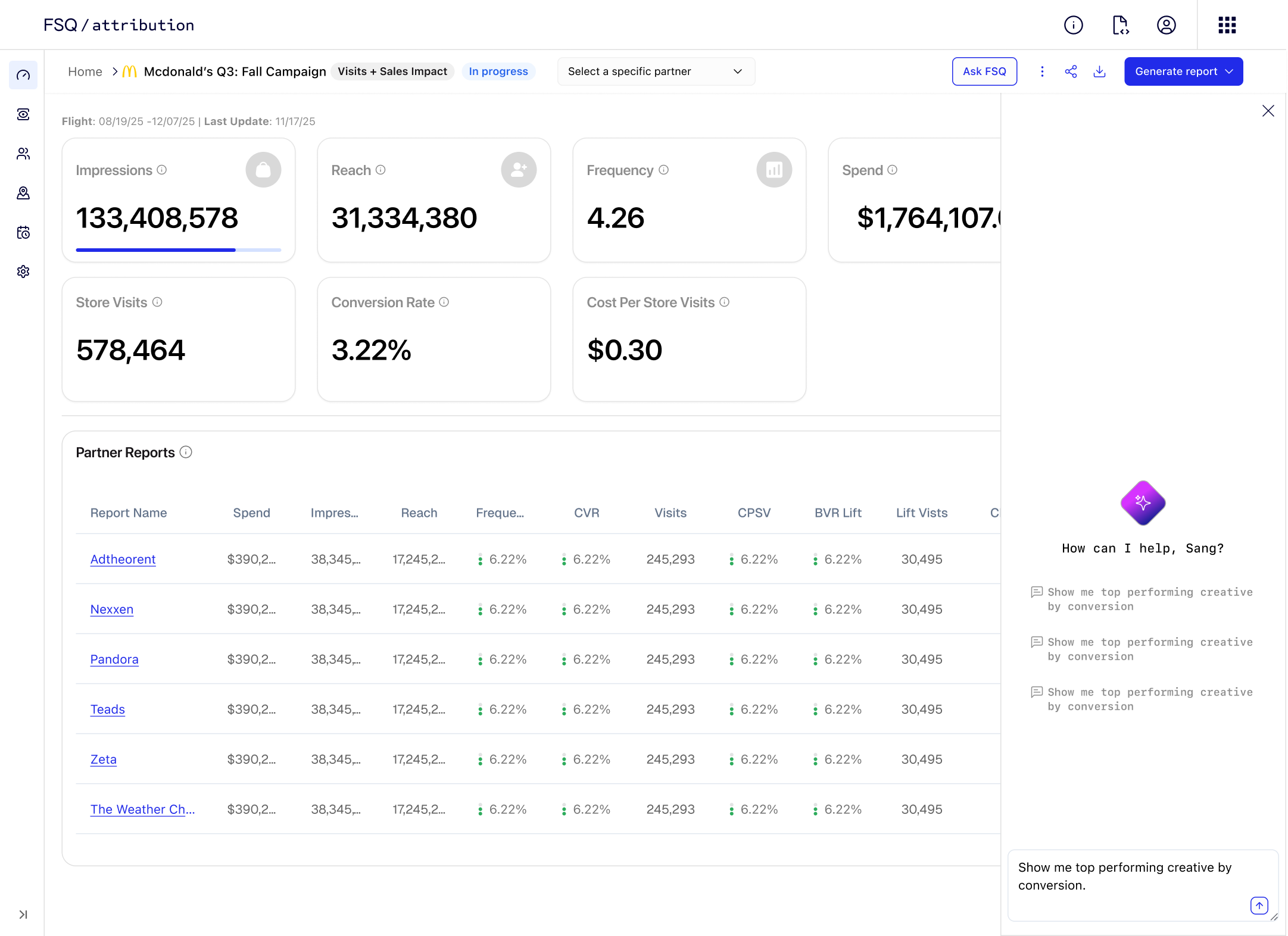
AI-first narrative surface, not bolt-on dashboards
Centered the experience on guided insight: the layout shifts to prioritize conversation and synthesis so users get to answers without hunting through disconnected widgets.
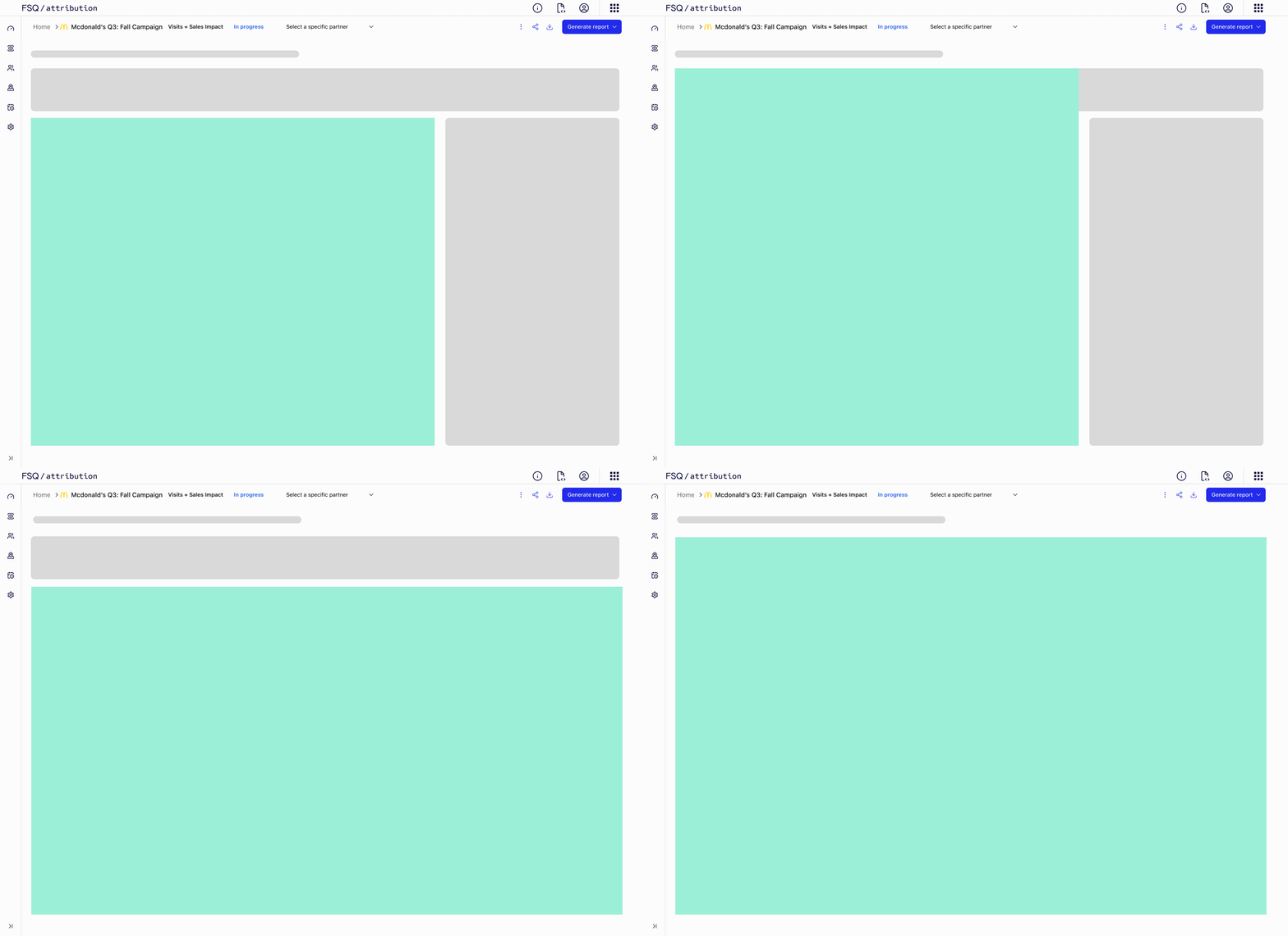
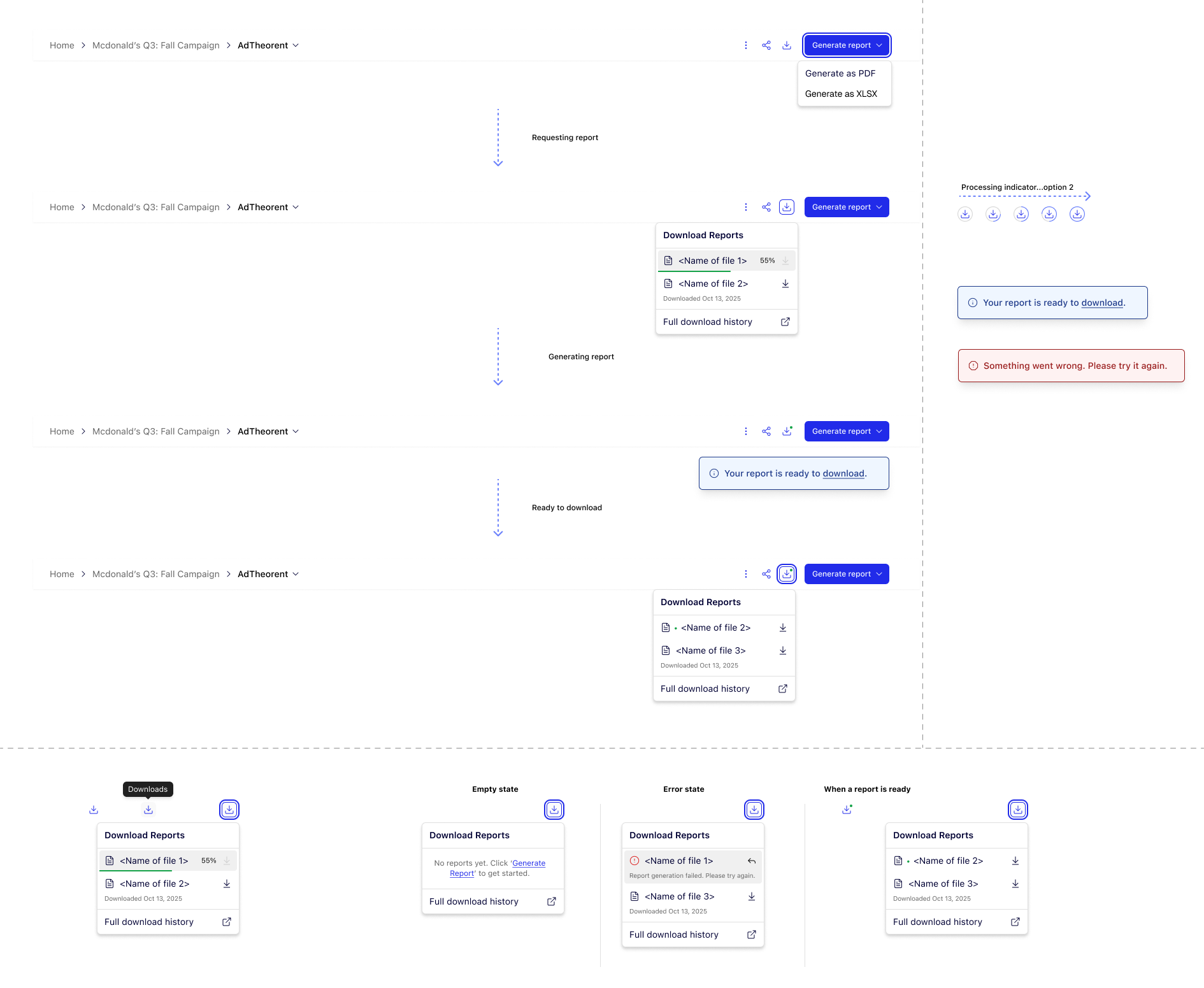
Trust-by-design for generated reporting
Explicit loading, report-generation, and download-history patterns frame what the system is doing—reducing black-box anxiety when automation replaces manual analyst handoffs.
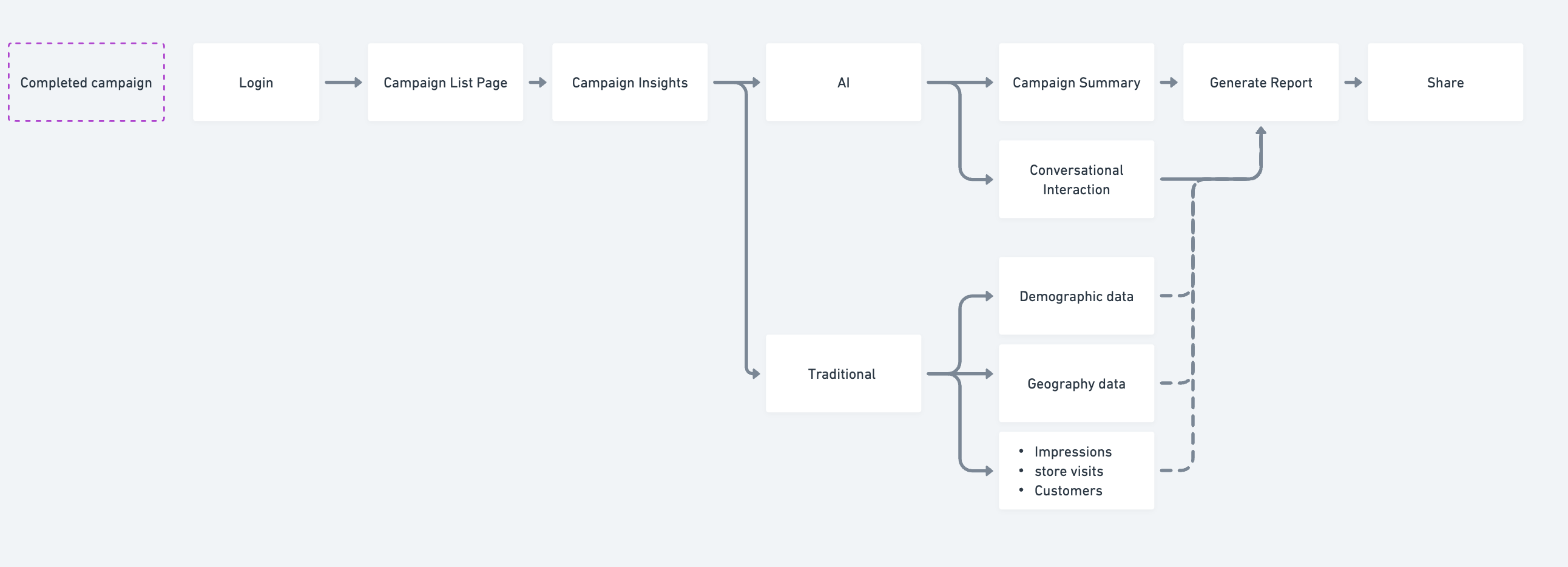
Omnichannel structure anchored in agency mental models
Information architecture follows how agencies compare channels and periods—so cross-campaign reads stay coherent instead of tool-centric.
Outcome
The work aligned teams through a single product story: self-serve paths to explain performance and clear escalation when human review still mattered. Design artifacts and prototypes became the shared spec for Engineering—shortening ambiguity between “report UI” and “measurable product outcomes.”
Impact
Business
- Reduced reliance on bespoke reporting requests as the primary customer path
- Stronger story for retention: faster time-to-insight for agency stakeholders
- Foundation to scale Attribution without linear headcount growth in ops
Product
- Coherent IA across reporting states (default, AI-centric, generation, history)
- Reusable patterns for trust and progress in AI-assisted flows
- Clear differentiation from “another dashboard” competitors
User
- Agencies spend less time requesting and re-requesting custom cuts of data
- Faster orientation: questions map to surfaced insights, not empty filters
- More confidence when acting on automated outputs—bounded by transparent system states
Full case study walkthrough — context, research, workflow, ideation, and final design screens (linear narrative).